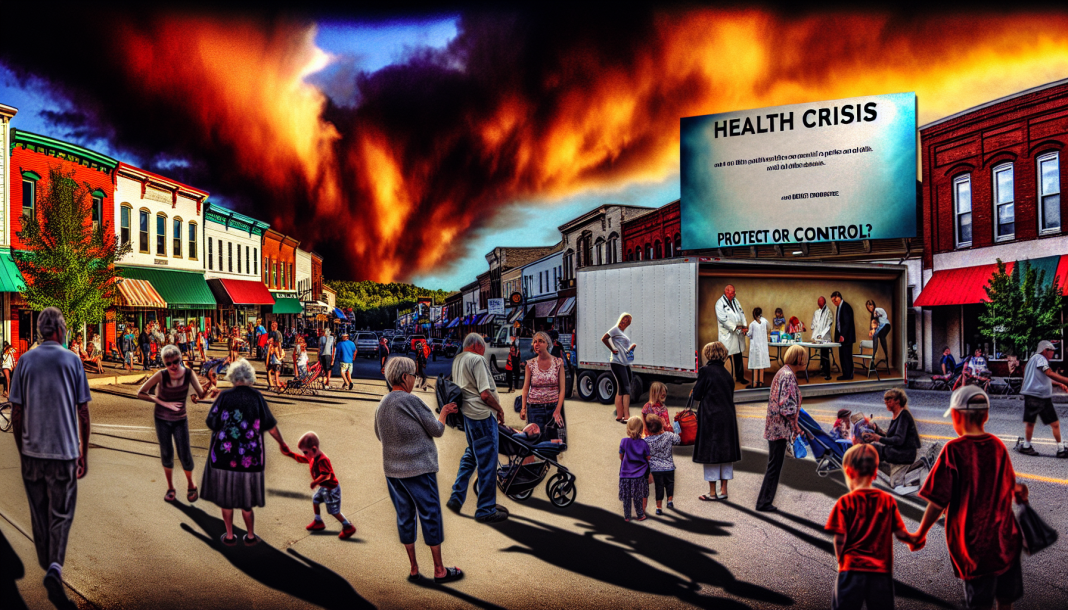

Nestled around the dusty, sun-drenched streets of Colorado City, Arizona, and Hildale, Utah, is a community grappling with more than just the occasional desert breeze. Recently, these sister towns—and their neighboring locales like Hurricane, St. George, and Iron County—have found themselves at the heart of a concerning health crisis: a measles outbreak that's managed to shake up more than just local residents' routines.
With at least 123 confirmed measles cases, this outbreak is officially the second-largest in our nation for 2025, marking a stark reminder of the delicate balance we tread when it comes to public health. If you’re wondering why this is happening, the answer is at once complex and profoundly human. It appears that the specter of vaccine hesitancy has taken a firm hold here, powered by personal beliefs and religious convictions. And though the reasons for opting out of immunizations are deeply personal, they have broader implications for community health—especially when vaccination rates waltz perilously below the 95% threshold needed for herd immunity.
Taking a closer look, Iron County, Utah only boasts an 82.4% vaccination rate. Meanwhile, Washington County sits at 79.2%, and our neighbors in Mohave County, Arizona, come in at a similar 78.4%. Each of these figures falls short of what's necessary to keep measles at bay, illustrating how a personal choice can ripple outward, impacting an entire community.
Thankfully, local health departments are working tirelessly, employing proactive measures such as wastewater testing to track the virus's movements, thereby pinpointing areas of heightened risk. It’s like casting a public health safety net, and frankly, it's a comfort knowing there are folks out there keeping watch for us all.
Still, the reach of the outbreak has spread like ripple after a pebble dropped into a pond. Ironically, the connectivity that once bound these communities in shared spirit is now also aiding the virus's move into new territories. Schools—normally centers of learning and laughter—have found themselves as major points of exposure. The virus’s nomadic journey has unfortunately also infiltrated healthcare facilities, a scenario public health officials are hard-pressed to contain.
The measles issue, however, isn’t just a kernel of a local story; it’s a chapter in a much larger national narrative. In 2025 alone, the U.S. has documented 1,618 measles cases across 42 states, with most linked to outbreaks like ours. Oh, how quickly we've moved from eliminating measles in 2000 to staring down yet another pipeline of preventable illnesses.
As a friendly neighbor with a penchant for understanding the finer details, I see this outbreak as a clarion call for action and compassion. It reminds us of the burdens our health systems must bear when community immunity falters. It also sheds light on the risks to those most vulnerable—folks who rely on the rest of us to build that critical wall of immunity. Ensuring the health of our communities means embracing the science we know and treading the middle ground with empathy and education.
In the grand tapestry of society, each thread matters, especially when it comes to health. Let’s continue these conversations about vaccines, respect one another’s voices, and work collectively toward community wellness. Measles might be in our midst, but together, we can stem its reach, champion our collective health, and emerge resilient on the other side.