

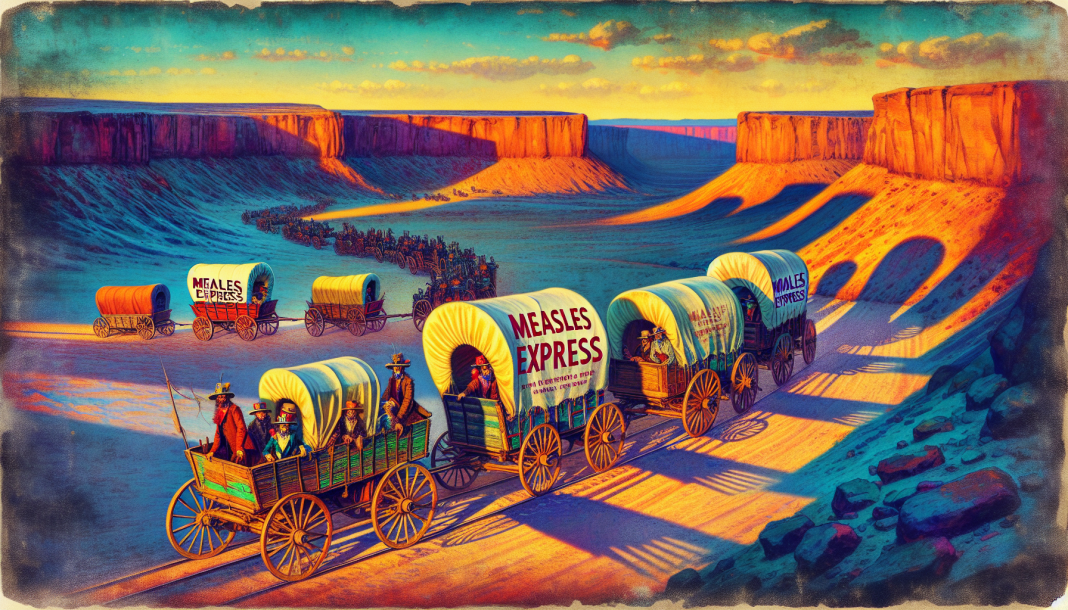
In a twist that only 2025 could conjure, a measles outbreak has decided to grace the Utah-Arizona border with its presence, prompting public health officials to ask: Are people trying to relive the joys of 19th century illnesses, or just bored with the security of modern medicine?
The outbreak, which has ballooned to 123 confirmed cases as of late October, has turned the sleepy towns of Colorado City, Arizona, and Hildale, Utah, into hotspots—often a moniker reserved for trendy brunch destinations. But instead of avocado toast, these towns are serving up a healthy dose of measles, much to the dismay of the local and national health communities. The infection is showing off its impressive CV, boasting contagiousness levels that would make even the most aggressive multi-level marketer blush.
The spread has not confined itself to these two close-knit communities, potentially because even viruses get a little stir-crazy. It has meandered its way to Hurricane, St. George, and further into Iron County, Utah—putting these towns on the map for reasons less desirable than, say, a Hollywood backdrop.
Now, one might think that in 2025, vaccination rates would be comfortably lounging above the recommended 95% threshold for measles herd immunity. However, the reality shows otherwise. Iron County, Washington County, and Mohave County boast vaccination rates barely climbing into the low 80% range, treating herd immunity more like a friendly suggestion than a critical goal for public health. Perhaps measles is an aspiring motivational speaker, here to teach us all a lesson about complacency.
The hospital hall of fame now includes seven individuals hospitalized by the outbreak—five from Utah and two from Arizona—due to measles’ impressive repertoire of complications, including deafness, blindness, and brain swelling. It’s as if measles took “go big or go home” too seriously, parading as the overachiever of viral infections.
Local health officials face the Herculean task of convincing the vaccine-hesitant residents of the benefits of modern medicine—a challenge not unlike selling ice in Antarctica or trying to find middle ground in a heated pineapple-on-pizza debate. The outbreak started among school clusters, where the only thing spreading faster than lunchroom gossip was measles itself. Now, it has taken residence in community settings ranging from hospitals to urgent care clinics, quite the overextended tour for such an ill-mannered guest.
Cooperation between Arizona and Utah health departments has been key in tackling the outbreak. Nevertheless, Utah’s public health department maintains a low-risk estimation for the general public—perhaps this is optimism, or perhaps the tactical advantage of finding humor in irony.
This outbreak is a fitting addition to 2025’s quirky script, filling in as part of the nation’s biggest measles adventure in over three decades, with the CDC reporting more measles cases this year than celebrities on reality TV. In response, Utah has introduced wastewater testing to keep an eye on the virus—a method somewhat reminiscent of reading tea leaves, but decidedly less mystical.
In a world increasingly driven by likes, shares, and the constant pursuit of the next big thing, this outbreak reminds us that measles, ever the classic, is not ready to bow out quietly. The tale of low vaccine coverage, community travel, and individual choices plays out along the Utah-Arizona border, driving a satirical yet stark reminder of the delicate tightrope we walk between personal freedom and public health.