

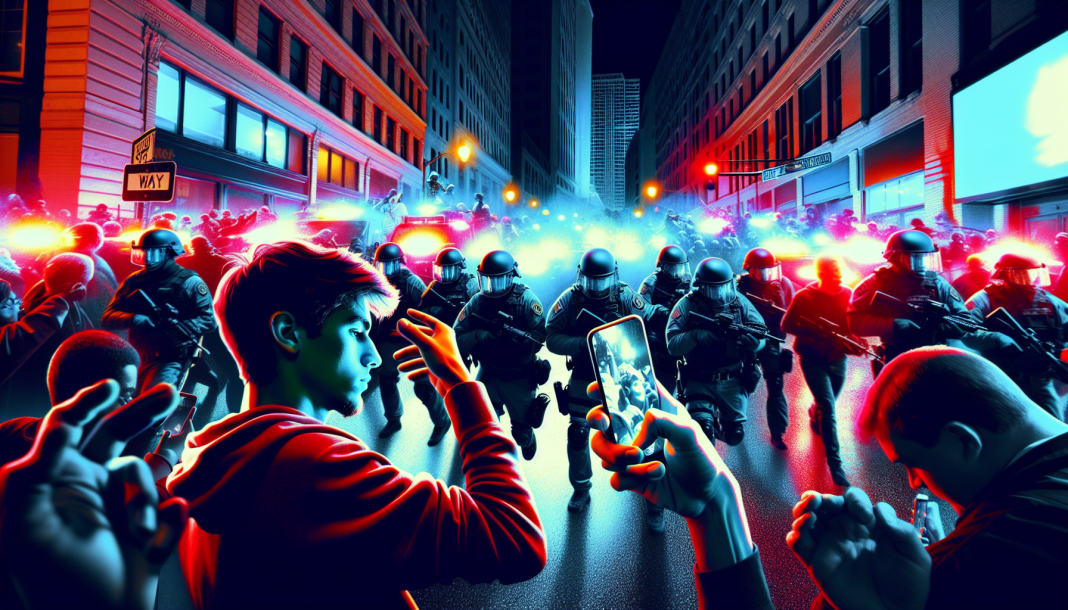
The recent events surrounding U.S. immigration enforcement have added a new chapter to the ongoing tragedy-comedy that is modern American policy. In a scenario that could be mistaken for a dystopian novel or an episode of a particularly surreal reality TV show, U.S. Immigration and Customs Enforcement (ICE) agents in Los Angeles exercised what they presumably consider diplomacy by shooting a popular TikTok streamer. Carlitos Ricardo Parias, the 44-year-old Mexican national and streaming sensation, ended up with a bullet in the elbow—a scenario that, unfortunately for Parias, did not involve any Hollywood special effects.
Parias, known for wielding his smartphone to document police and immigration activities in the lively theater of South L.A., turned out to be quite inconvenient for the authorities’ secretive opera. As irony would have it, his streaming career has been anything but undocumented. Recognized by the city for informing the community, Parias might have been better off filming the bullet like John Woo—if only to get a cleaner Oscar-worthy shot. Likewise, it’s worth noting that Parias—celebrated for capturing law enforcement while being undocumented himself—has become an unintended poster child for the underreported “advance warning with flair” class of immigrants.
The incident, which could have been taken from the director's cut of “The Misadventures of ICE,” started when Parias allegedly escalated intentions from mere evasion to vehicular warfare during an arrest attempt. Indeed, what could one expect when combining high-powered ICE agents, a slow day in South L.A., and the timeless art of dodgem: a riveting spectacle that left both Parias and an unfortunate deputy U.S. marshal with injuries deemed non-life-threatening—but not non-newsworthy. Naturally, news like this rides trends faster than a TikTok dance and before you know it, is plastered across protests in Chicago to New York.
Protests, drizzled generously with chants of “shame,” have been met with a meticulous run-through the Official Federal Response Handbook. It contains age-old wisdoms that place the blame not on the enforcers but on vague entities like "local sanctuary policies" and the ever-mysterious "political rhetoric." As federal officials valiantly claim, these enforcement actions merely target individuals with “criminal histories.” Although, the timing and optics of raiding immigrant-heavy hallways over perceived counterfeit t-shirts from Canal Street have sparked more blockbusting protests than Rockefeller Center at Christmastime.
Meanwhile, calls for more scrutiny on ICE tactics clash with a Homeland Security leadership approach that could be kindly described as a slapstick attempt to place obstacles in the race towards transparent governance. Critics and citizens alike ponder what exactly constitutes a “criminal history” worthy of aggressive raids, leaving everyone to wonder if selling Calvin "Kueen" knockoffs next to dumpling stands fits the bill. In response, Homeland Security might even suggest these sellers trade in irony and sell imitation sanctuary.
Like a perfectly timed comedy bit, Representative Hoan Huynh of Illinois even jumped into the act, with tensions reaching a crescendo after Customs officers briefly detained him for what feels more akin to a bureaucratic adult timeout than a political strategy. Amidst this political choreography, the satirical undertones of immigration policy are playing out with none of the artistic subtlety of a vaudeville slapstick show.
Critics might argue this heavy-handed script poses grave implications for civil liberties, exposing the perennial balancing act between security measures and democratic principles. However, for the average citizen, it’s best to sit back, munch some popcorn, and keep an eye on TikTok, where the most authentic real-time reporting unspools, unfiltered by governmental slapstick.
As reality continues unfurling before us, and federal agencies, protesters, and social media influencers debate their lines, one must ponder: are we really watching an escalating enforcement crisis, or the airing of an ironic satire that never seems to end? Only time, or perhaps the sequel, will tell.